Planting the Seeds of Tomorrow: UMO Grad Danielle Trimbur Inspires the Next Generation of Ag Leaders
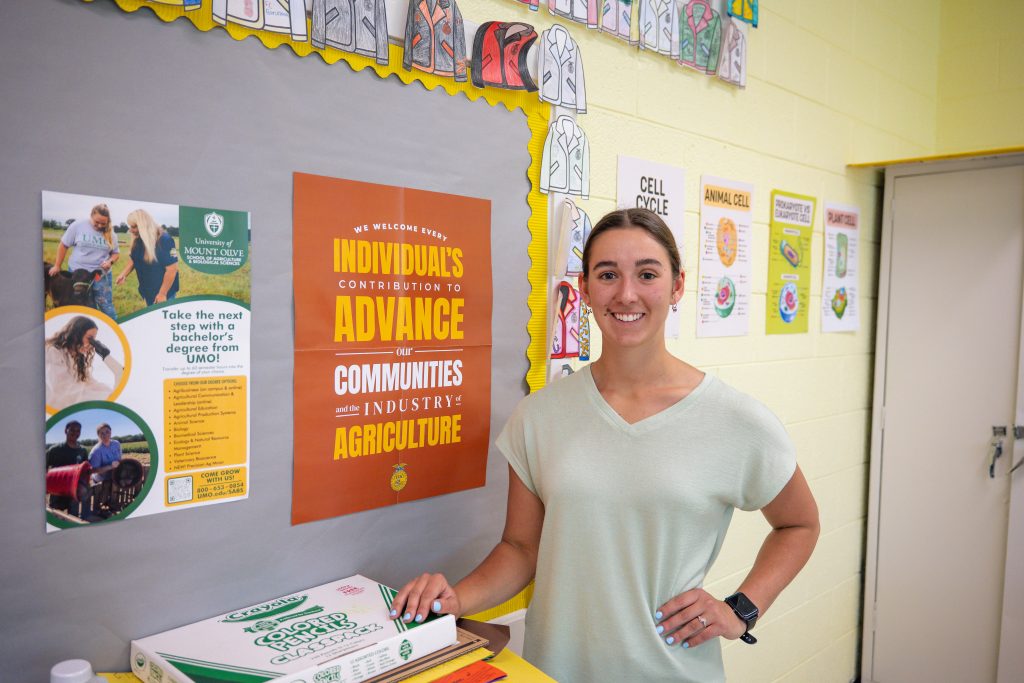
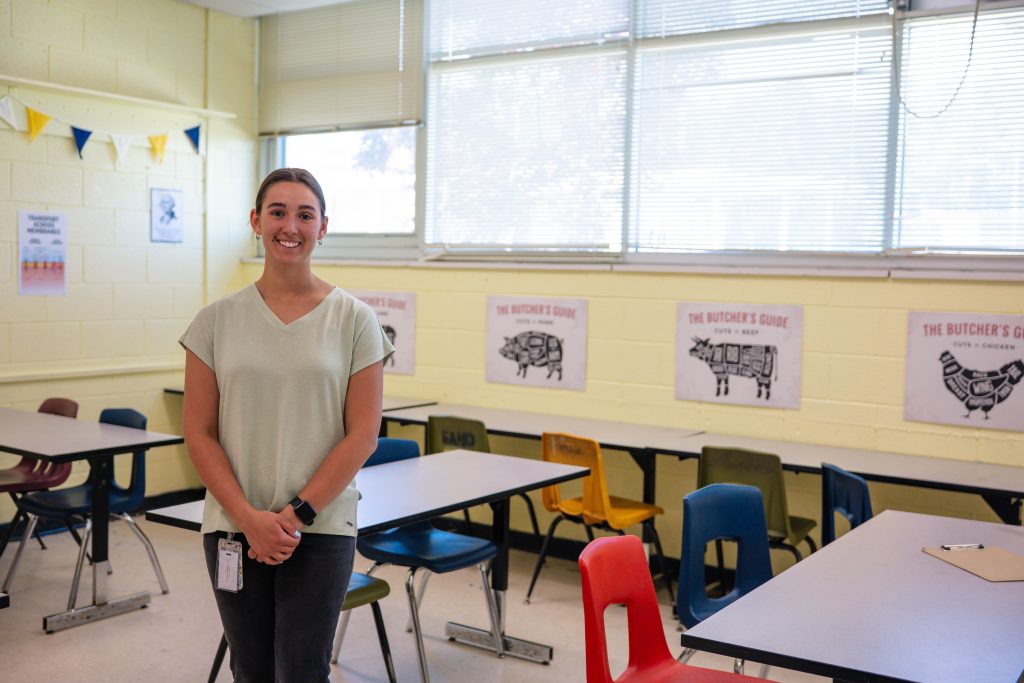
From Pennsylvania pastures to North Carolina classrooms, Danielle Trimbur has always followed the pull of two things: agriculture and education. Today, as an agriculture teacher at Wallace-Rose Hill High School, she is living out both passions—planting seeds of curiosity, confidence, and career-readiness in her students.
Born and raised in the rural town of Oley, Pennsylvania, Trimbur grew up surrounded by woods, dairy farms, and cornfields. It was there that her love for the land and her passion for teaching began to take shape. “I went to a school with a wonderful FFA program and was involved in a church with deep agricultural roots,” she recalls. “My high school agriculture teacher, Mr. Deysher, had a huge impact on my life. He pushed me to compete in FFA, and from there, I was hooked.”
Trimbur’s journey took her south to the University of Mount Olive, where she threw javelin for the Trojan track and field team while pursuing a degree in biological sciences in agricultural education with a minor in plant science. Balancing the demands of a student-athlete with rigorous academic expectations wasn’t easy, but she rose to the challenge—graduating in 2024 with a list of accolades that included Agriculture Education Student of the Year, Athlete of the Year, and Academic All-American honors.
Now, she is using that same drive and determination to ignite a passion for agriculture in her students.
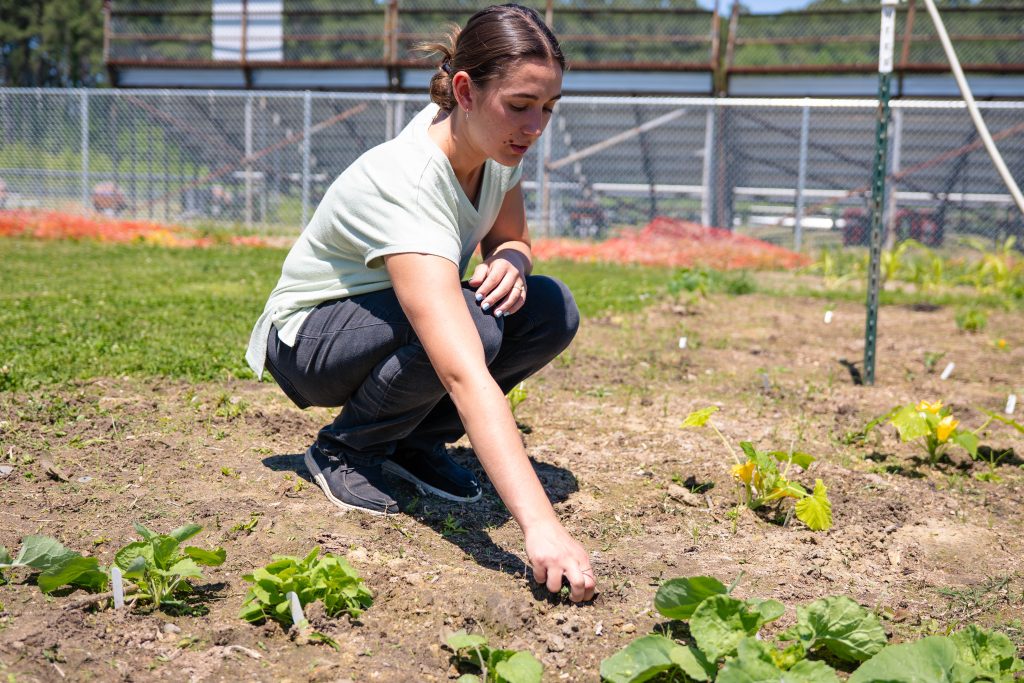
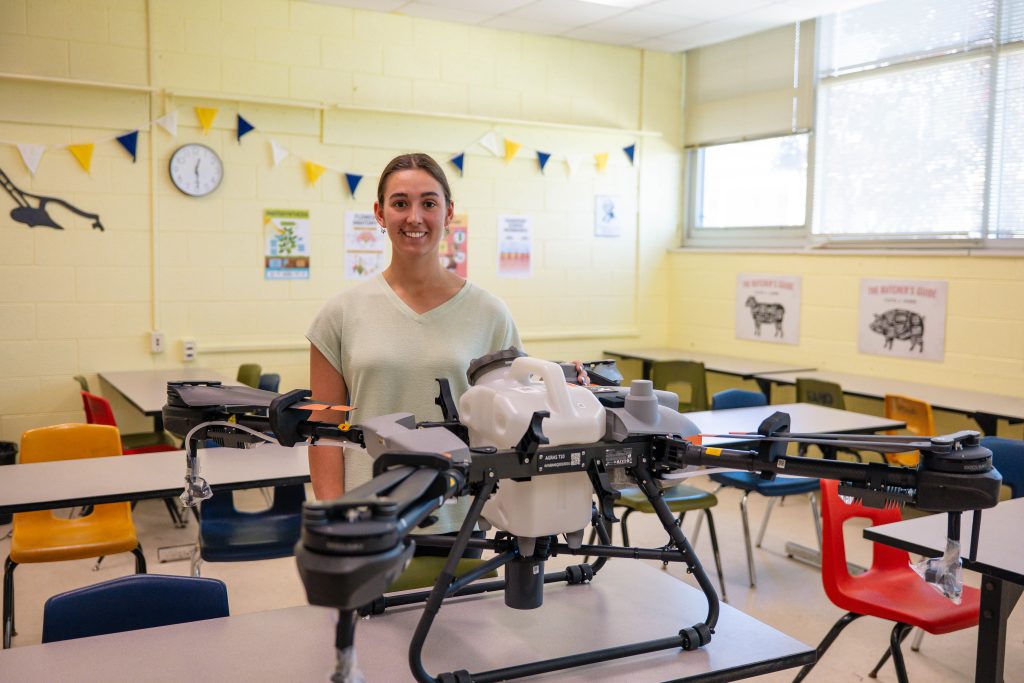
As an agriculture teacher at Wallace-Rose Hill High School, Trimbur brings energy and innovation to her classroom. From hands-on horticulture projects—like her plant portfolio initiative—to the introduction of drone technology in precision agriculture, she is constantly seeking ways to connect students with the evolving ag industry.
“There’s something special about watching a student walk in every day excited to check on the plant they’ve nurtured from a seed,” she says. “And now with drones, students who love technology are getting to see how it applies directly to agriculture. It’s a game-changer.”
Her program also incorporates field trips, guest speakers, and FFA competitions, giving students multiple entry points into agricultural literacy and career exploration. “Competitions are built into our curriculum, so students get excited—especially the competitive ones—and they learn practical, real-world skills along the way.”
Trimbur credits her time at UMO for giving her the confidence and skills to lead in the classroom. “Every professor impacted me in some way,” she says. “Dr. Jennifer Bradley and Dr. Scott Tilley grew my love of plants and soils. Mr. Tim Warren helped with ag mechanics. Dr. Stephen Edwards and Dr. Ashley Johnson gave me opportunities to try new teaching strategies. And my student teaching experience with Mrs. Ali Hicks and Mr. Johnny Jessup really solidified my passion for the classroom.”
These mentors helped her develop the voice and leadership style she now brings to her role—an especially important trait as a young woman in a field still traditionally dominated by men.
Trimbur acknowledges that finding her footing as a young female ag teacher hasn’t always been easy. “There have been times I felt overlooked because of my age or experience level,” she says. “But by stepping out of my comfort zone and being willing to ask questions, I’ve been able to grow—for myself and for my students.”
For Trimbur, representation matters. “It’s important that young women see female role models in agriculture. I want to be that example—someone who is passionate and knowledgeable. Hopefully that spark transfers to them.”
To her, being a woman in agriculture is deeply meaningful: “It means I play a role in feeding the world—whether it’s through actual food or through knowledge. I love working in God’s Creation and getting my hands dirty alongside my students.”
As she looks to the future, Trimbur plans to pursue a master’s degree in agricultural education and continue adding tools to her teaching toolbox through certifications and workshops. “My goal is always to learn more so I can give more to my students,” she says.
Her advice to young girls considering a future in agriculture? “Try it all. Go to the workshops, take the elective, attend the camp. You don’t have to love everything, but you do have to try. Every experience adds something valuable.”
With educators like Trimbur leading the way, the future of agriculture—and the students who will one day shape it—looks brighter than ever.
The University of Mount Olive is a private institution rooted in the liberal arts tradition with defining Christian values. The University was founded by the Convention of Original Free Will Baptists. For more information, visit www.umo.edu.